the last man who looked up

#The Last Man Who Looked Up
The sky over Theopolis was a beautiful, meticulously managed lie.
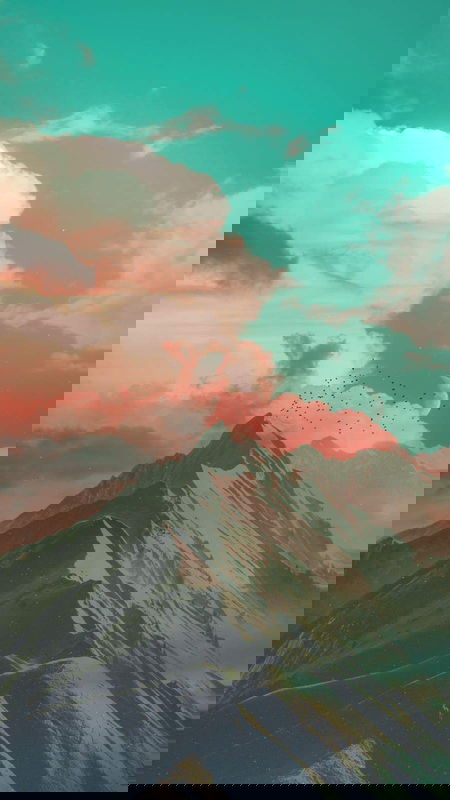
From within the domed city, it presented a predictable, soothing spectacle. At 0700, a gentle azure blush, tinged with coral. By midday, a crisp, photorealistic cerulean dotted with fluffy, algorithmically-generated cumulus that never threatened rain. Sunset was a twenty-minute masterpiece: rose gold bled into lavender, then deepened to a velvety indigo, pierced by the first, perfect pinpricks of stars from the CityAstro™ catalogue. It was flawless, safe, and sterile. It was also, as Aris knew in the marrow of his bones, an insult.
Aris was the Dome-Sky Manager, Senior Grade. His office was the highest habitable point in Theopolis, a glass bubble perched atop the central administration spire. From here, he and his team curated the sky-dome’s massive nano-pixel array, managed the atmospheric mood-lighting, and scheduled celestial events. A meteor shower for Founders’ Day? A double rainbow after the weekly civic cleaning cycle? Aris could code it. His colleagues saw a complex, prestigious technical system. Aris saw a gilded cage, and he was the canary who could no longer sing, only remember the song.
His rebellion was small, secret, and sacred. In a shielded drawer of his antique walnut desk—a real wood desk, a relic that had cost him a fortune—he kept The Archive. Not a data-slate, but a cloth-bound folio of printed photographs, frayed at the edges. His great-grandfather, Elian, had been a Cloud-Catcher, one of the last freelance atmospheric photographers before the Great Weather Pacification and the raising of the domes.
Aris would wait until his shift ended, until the dome had dimmed to its default “Starlight Serenity” setting. Then, with the city’s hum a distant thrum below, he would open the folio. Here was the truth. Here was chaos, and beauty born from it.
A photograph labelled Cumulonimbus, Kansas Plains, 2087. Not a tidy cloud, but a monstrous, anvil-headed cathedral of vapour, slate-grey at its base boiling into a bruised purple, its top sheared flat by stratospheric winds and glowing with stolen sunset light. It spoke of pent-up violence, of the air itself convulsing. Aris could almost feel the ozone-charged wind, hear the deep-throated grumble of thunder his great-grandfather had described in his notes: “Not a sound, but a feeling in your chest. The sky clearing its throat.”
Another: “Stratus over the North Atlantic, Dawn.” No dramatic colours here, only an endless, seamless field of pearlescent grey, merging with a leaden sea so perfectly the horizon vanished. It was a study in infinitude and melancholy, a world reduced to two soft, merging tones. It made the dome’s crisp, defined horizon seem a childish artifice.
His favourite was simply marked “The Green Flash, Key West.” On the horizon, the sun was a distorted, sinking ellipsoid. And just as its last sliver vanished, a searing, impossible emerald light had flashed—a fleeting atmospheric miracle caused by the refraction of light. Elian had waited seven weeks to capture it. In Theopolis, sunsets were a smooth, guaranteed gradient. There was no room for magic, for a green flash that appeared only if you waited with desperate, patient hope.
Aris’s work became a silent protest. He began inserting subtle “errors” into the dome’s programming. One Tuesday, he let a bank of altocumulus linger two shades too grey, casting a sombre, contemplative pall over the financial district. He received three memos about productivity metrics. Another time, he scheduled a sunset that was all fiery, angry reds and oranges, with no calming lavender transition. The Social Harmony Bureau logged a 4% increase in minor domestic disputes that evening. Aris secretly considered it a success.
His superior, Administrator Kael, summoned him. Kael was a man who believed efficiency was the highest form of aesthetics.
“Your skies have been… idiosyncratic lately, Aris,” Kael said, steepling his fingers. “Our metrics show a correlation with increased citizen anxiety. The sky is a utility, Aris. Like water or power. It must be reliable, calming, predictable. We cannot have the populace unsettled by meteorological angst.”
“Perhaps they’re not unsettled,” Aris ventured, his throat tight. “Perhaps they’re feeling something else. Something real.”
“Real?” Kael smiled thinly. “Real is typhoons that flatten cities. Real is UV radiation that scorches skin. Real is particulate matter that blackens lungs. What we provide is better than real. It is ideal. Keep it ideal.”
That night, Aris opened the folio to a photograph he rarely dared to view: “Supercell Tornadic Formation, Oklahoma.” It was terrifying. The sky was a sickly, gangrenous green. A black, twisting funnel descended from a roiling mass of cloud like a probing finger of God. The earth below was obscured by a curtain of rain and debris. It was the raw, screaming face of nature’s fury. But in his great-grandfather’s notes, Aris read not just fear, but awe. “We watched from a mile away,” Elian had written. “The noise was like a thousand freight trains. But the colour… that unholy green light on the prairie… it was the most beautiful, terrible thing I have ever seen. It made you feel alive because it reminded you that you could die.”
Aris understood then. The dome’s beauty was that of a painted porcelain plate: perfect, static, dead. The sky’s true beauty was dynamic. It was entwined with danger, with transience, with scales of power that rendered human concerns microscopic. Its beauty was in its indifference. It didn’t perform for you. It simply was. And in witnessing its vast, uncaring drama, you felt your own small, precious humanity more acutely.
His rebellion escalated from aesthetic to existential. He began giving unauthorized lectures in the city’s under-utilized botanical archive, using The Archive as his text. He showed a handful of curious students, artists, and misfits the photographs.
“See this?” he’d say, pointing to the supercell. “This isn’t a ‘weather event.’ This is the sky thinking a thought. A violent, complex thought. We live under a sky that has been lobotomized.”
He spoke of the forgotten colours: the green flash, the purple shadow of a mountain cast on distant clouds, the eerie yellow that presaged a blizzard. He described sensations they’d never felt: the prickle of static before a lightning strike, the sudden, smell of petrichor—wet earth—as rain hit parched ground, the weight of humidity that made the air feel like a warm, wet blanket.
He became a underground figure. The “Sky-Dreamer.” To the authorities, a nuisance. To his small following, a prophet of a lost world.
The end came, as it often does, from love, not malice. Lyra, a young botanical engineer who had attended his talks, brought him a gift. It was a small, sealed biodome. Inside, growing in a symbiotic tangle, were moss, a tiny fern, and a sliver of lichen. “I’ve been cross-referencing your great-grandfather’s photos with old ecological surveys,” she said, her eyes bright. “This is a patch of the Oklahoma prairie, pre-tornado. As close as I can get from seed banks and gene-splicing. It’s not the sky, but it’s the earth that sky looked down on.”
Aris was profoundly touched. He placed the biodome on his desk by the folio. It was a piece of the true world, however tiny. He didn’t notice the nearly microscopic sensor embedded in the soil-nutrient node. Lyra, passionate but naive, had used municipal lab equipment for her project. The sensor, standard issue for all civic bio-research, flagged the unregistered, non-standardized biological activity and sent a routine alert.
The Peace Officers arrived at his apartment at dawn. They confiscated The Archive, the biodome, and all his personal data-slates. The charge was “Ecological Sedition and Unauthorized Propagation of Non-Certified Biota.” The real crime, unstated, was possessing memory, and sharing it.
Aris stood before a tribunal. Administrator Kael presented the evidence. The folio was labelled not as photographs, but as “ideological contraband.” His sky-programming “errors” were cited as “willful psychological destabilization.”
“You have spent your career,” Kael intoned, “looking at a perfect sky, yet you chose to fill your mind, and the minds of others, with images of violence, chaos, and decay. Why?”
Aris, who had been silent, looked past Kael, out the tribunal’s window at the dome’s current setting: “Morning Optimism – Variant 3.” It was a vacuous, cheerful blue.
“Because,” Aris said, his voice clear in the sterile chamber, “you have confused peace with emptiness. You offer them a silent sky and call it tranquility. But a silent sky is a dead sky. The beauty of the real sky wasn’t just in its colours. It was in its voice.”
He turned to face the tribunal members, who viewed him with polite incomprehension.
“It was the sigh of the wind through a billion pine needles. The kettle-drum roll of thunder. The white noise of rain on a tin roof. It was the crackle of ice in the upper atmosphere. It spoke in a language of pressure and temperature, of heat rising and cold falling. Its beauty was a conversation between earth and space, and we were just listeners, lucky to be there.”
He looked back at Kael. “You’ve given them a painting and told them it’s a window. I just tried to remind them what a window is for.”
The sentence was not harsh by Theopolis standards. Re-education. Re-calibration of civic attitudes. His access to the sky-dome systems was permanently revoked. He was reassigned to Sub-Level 9, Wastewater Flow Management. It was a world of pipes, of monotonous, buried sound, with no windows at all.
For a year, Aris worked in the dim, humid underworld. The silence of his mind was louder than any thunder. He felt his memories of the photographs beginning to soften at the edges, diluted by the relentless, grey present.
Then, on the anniversary of his tribunal, a minor system fault occurred in the western quadrant of the dome. A cascade failure in the nano-pixel array. It was repaired in eleven minutes. But for those eleven minutes, a jagged, roughly triangular section of the dome, fifty meters across, went transparent. It revealed not the climate-managed atmosphere beyond the dome, but the true, outer sky.
It was night. And the true sky was not the tidy “Starlight Serenity” of the dome. It was a black so deep it was like looking into the void itself. And across that void were strewn a billion, billion stars—not the curated hundred brightest, but a dizzying, multicoloured swarm. A river of crushed diamonds and sapphires and faint, ruby embers—the Milky Way, in a splendour no one in Theopolis under the age of eighty had ever seen. It was overwhelming, chaotic, terrifyingly vast, and breathtakingly beautiful.
All over the western sector, people stopped. They looked up. They pointed. Children, who had only known the dome’s placid imitation, gasped. For eleven minutes, the citizens of Theopolis saw infinity.
In Sub-Level 9, the alert chimed on Aris’s supervisor’s console. The man grumbled about overtime. But Aris felt it. A change in the hum of the city. A vibration not in the pipes, but in the air itself. A collective, indrawn breath from two million people.
He couldn’t see it. He was buried. But he knew. He closed his eyes, and in his mind, he didn’t see the perfect photographs from the folio. He saw his great-grandfather’s words, scrawled on the back of the tornado picture: “The most beautiful, terrible thing…”
Aris smiled, a small, private thing in the damp gloom. They had seen it. Just a crack, just a glimpse. But a crack was enough. A glimpse was a seed.
He returned to his console, monitoring the flow of recycled water. The hum of the city returned to normal. But something had shifted. Up above, people were going back to their lives. But they were looking at their perfect, predictable dome sky with new eyes. It seemed smaller now. Paler. A forgery.
And somewhere, a child was asking a parent, “What was that?” And somewhere, an artist was trying, with inadequate colours, to capture the memory of a stellar whirlpool. And somewhere, a deep, forgotten longing was stirring, like a seed in concrete, dreaming of rain.
Aris adjusted a flow valve, the green numbers on his screen reflecting in his eyes. He was the last man who had truly looked up, and he had been punished for it. But he wasn’t the last one anymore. The sky, with its brutal, indifferent, magnificent truth, had broken through. It had spoken, just once, just for eleven minutes.
And a whole city had finally begun to listen. The beauty wasn't in the safety of the lie. It was in the terrible, wonderful, endless truth of that deep, star-clotted black. The dream of the wild sky was alive again. And no dome, no matter how perfect, could ever contain it again.
Comments
No comments yet. Be the first to comment!